Tag Archives: #Apex

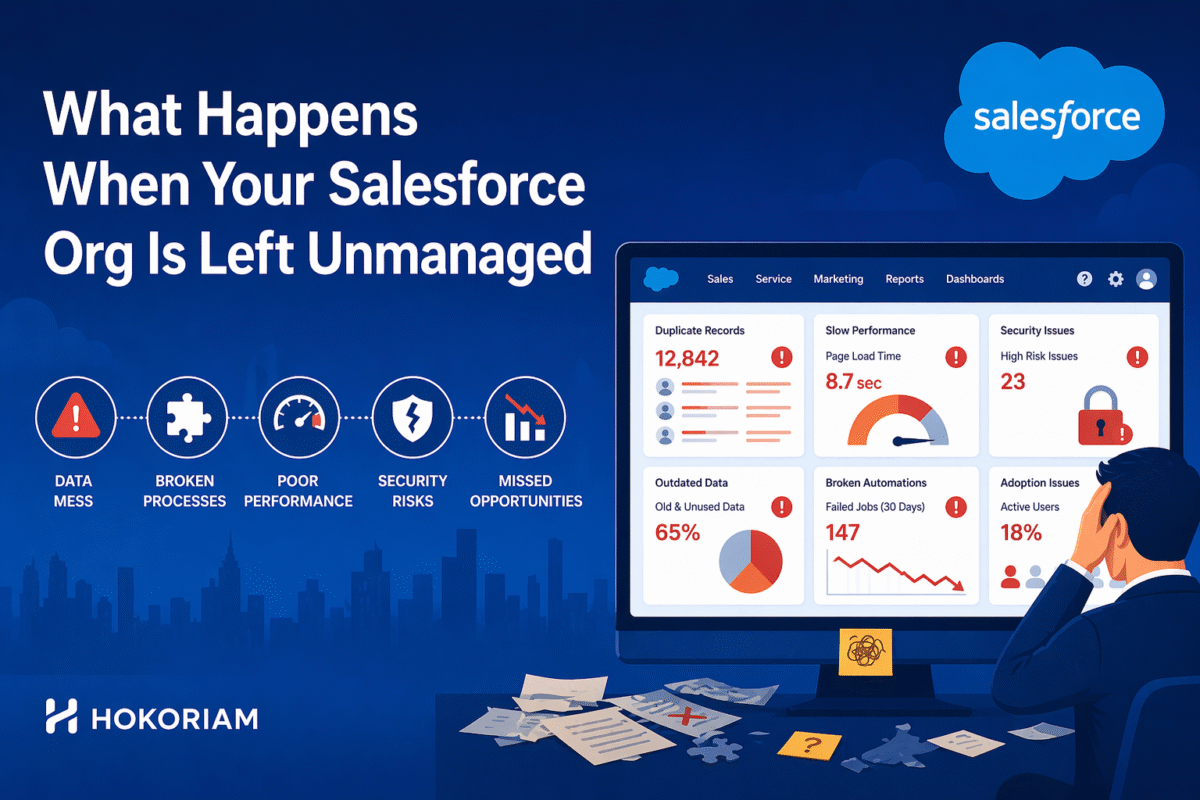
What Happens When Your Salesforce Org Is Left Unmanaged

What Happens When Your Salesforce Org Is Left Unmanaged

Technical debt accumulates silently. Governor limits creep closer. Automations built years ago break against new requirements. Salesforce orgs that are not actively maintained degrade — and most organisations don’t notice until something breaks in production. Every Salesforce org starts clean. Then requirements come in, implementations happen under deadline pressure, customisations compound, and the person who […]

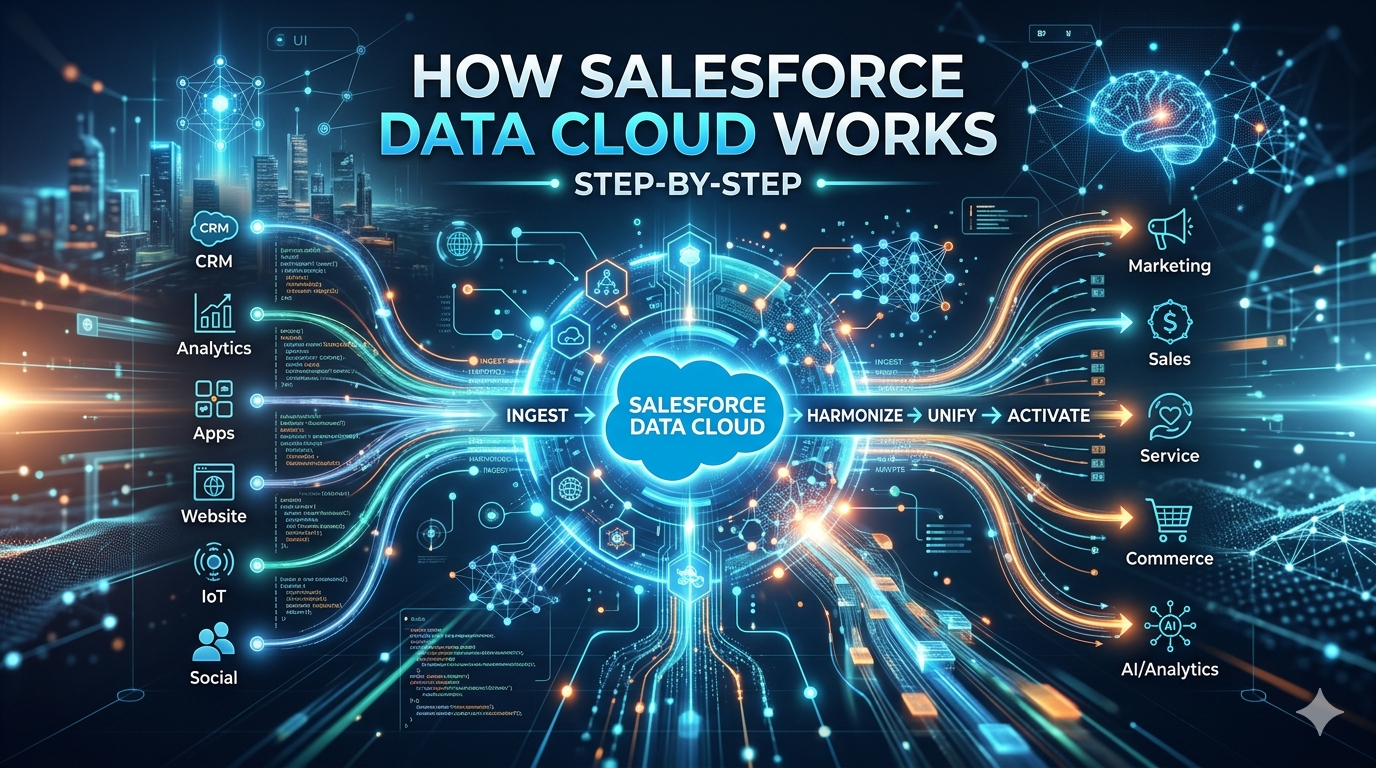
How Salesforce Data Cloud Actually Works (Step-by-Step Guide)

🏗️ Think of it Like Building a City Building a city needs: Roads (to connect places) + ID cards (to identify people) + Control room (to monitor everything) + Action teams (to respond) Data Cloud works exactly the same way. Let’s walk through each step 👇 📦 STEP 1 – Data Comes IN (Ingestion) What […]
Salesforce AI: How Artificial Intelligence Is Transforming CRM

Artificial Intelligence is no longer a future concept. It is already reshaping how businesses sell, support, and engage customers. Salesforce AI sits at the center of this transformation by embedding intelligence directly into Customer Relationship Management (CRM). Salesforce AI helps companies work faster, make smarter decisions, and deliver more personalized customer experiences. What Is Salesforce […]
The Real ROI of Salesforce Starts When Manual Work Stops Controlling the Business

The Real ROI of Salesforce Starts When Manual Work Stops Controlling the Business Enterprises do not lose margin because markets slow down. They lose margin because operational drag becomes too expensive to carry. In most multinationals, Salesforce already exists, yet revenue processes still rely on spreadsheets, email approvals, swivel chair data entry, and region specific workarounds. The problem is not that Salesforce cannot fix these issues. The problem is that Salesforce has not been engineered to eliminate them. When Salesforce is treated as a UI wrapped around legacy behavior, businesses get low adoption, inconsistent reporting, and an automation ceiling. When it is treated as an enterprise execution layer, built intentionally with Flow, Apex, and LWC across a scalable governed architecture, leaders unlock measurable financial performance. A global life sciences company recently faced this reality. Despite a multiyear Salesforce program, service cycle time remained above target and profitability was trending down. Technicians handled scheduling via phone calls. Contract entitlements were validated manually. Field data was retyped into ERP days later. Leadership had data dashboards but not operational control. The turning point came when the organization stopped asking "What features do we need next?" and instead asked "Which business outcomes are we failing to achieve?" From there, Salesforce was redesigned to become the operational core. Flow managed automated dispatching based on skill, parts availability, and SLA logic. LWC components in the service console provided entitlement visibility in real time. Apex handled predictive parts ordering triggered by IoT telemetry. Role based governance ensured sensitive data never crossed regional compliance boundaries. Salesforce integrated ERP, asset management, and field apps into a single transaction chain instead of five disconnected systems. The transformation was not cosmetic. Service cycle time decreased by 44 percent. Contract profitability improved because entitlements were enforced consistently. Repeat truck rolls dropped sharply. And because compliance was automated instead of manual, three markets that previously avoided digital field processes adopted the new global model quickly. The financial outcome was not an estimate. It appeared directly on the P&L. This is why strategic CRM design matters. Growth at scale requires architecture that tolerates complexity without passing it to employees. Automation reduces cost. Systems integration reduces waste. Governance reduces risk. Salesforce becomes a business accelerator only when it becomes the engineered environment where friction cannot survive. Hokoriam partners with multinational leaders who expect Salesforce to produce real business impact, not just more dashboards and licenses. If your next phase of transformation requires efficiency, profitability, security, and scale, we should talk. The value you expect from Salesforce is not theoretical. It is unlocked through design.

Enterprises do not lose margin because markets slow down. They lose margin because operational drag becomes too expensive to carry. In most multinationals, Salesforce already exists, yet revenue processes still rely on spreadsheets, email approvals, swivel chair data entry, and region specific workarounds. The problem is not that Salesforce cannot fix these issues. The problem […]
The Most Profitable MNCs Treat Salesforce as Infrastructure, Not Software

Enterprise transformation is no longer driven by isolated digital initiatives. It is driven by the quality of the systems that run the business every day. For multinational organizations, Salesforce is not just a CRM. It is the operating backbone that connects revenue, operations, finance, supply chain, and customer experience. The companies outperforming their peers are […]

This site uses cookies to offer you a better browsing experience. By browsing this website, you agree to our use of cookies.